
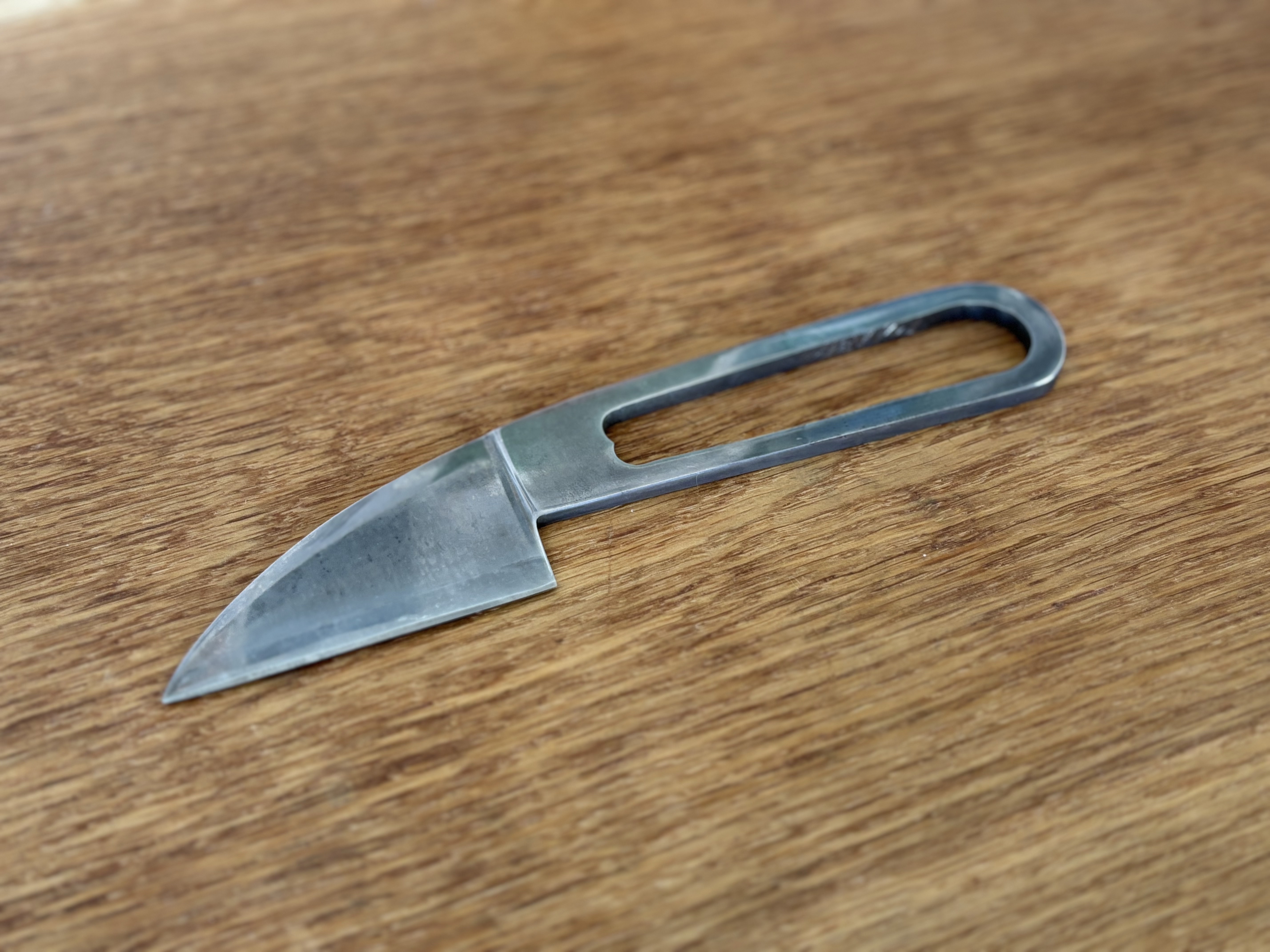
I forged this last year but never got around to posting it here, enjoy a gallery of this spring steel knife I made!
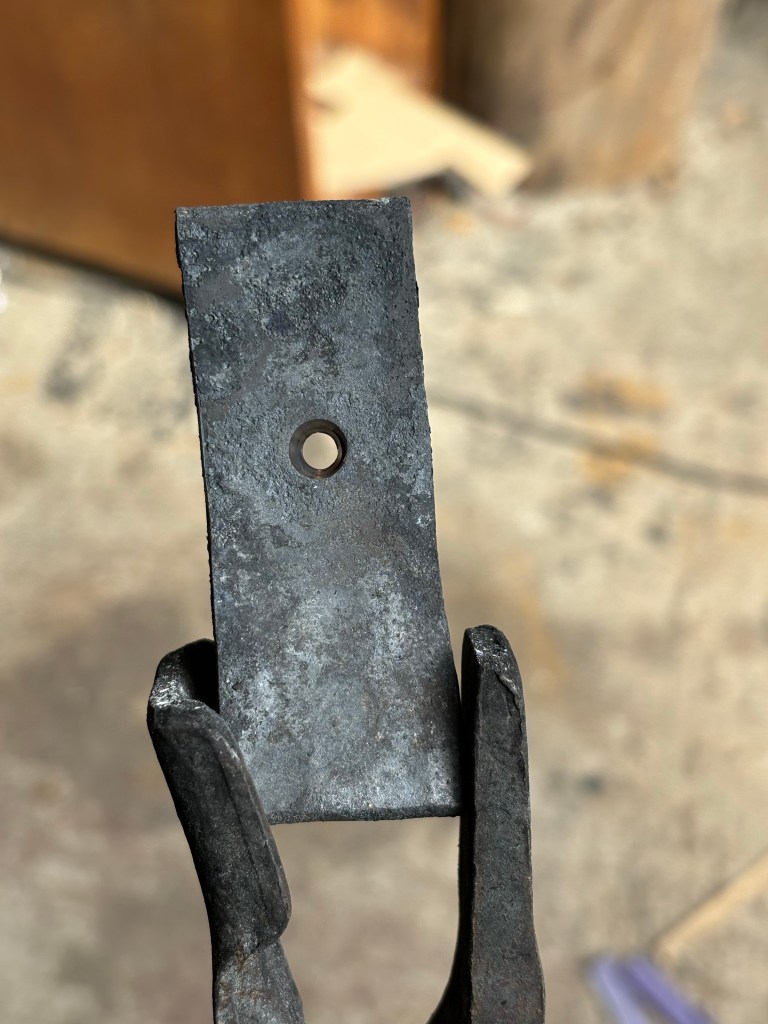
The Billet
I started off cutting a chunk out of a truck leaf spring, most of the metal I work with is reclaimed from local scrapyards and this piece is no exception. After flattening it out to the desired thickness I used a punch to drive a hole through it. I proceeded to use a couple of drifts, enlarging the hole until I was able to fit it over the round horn of my anvil. Regrettably I neglected to photograph this process.
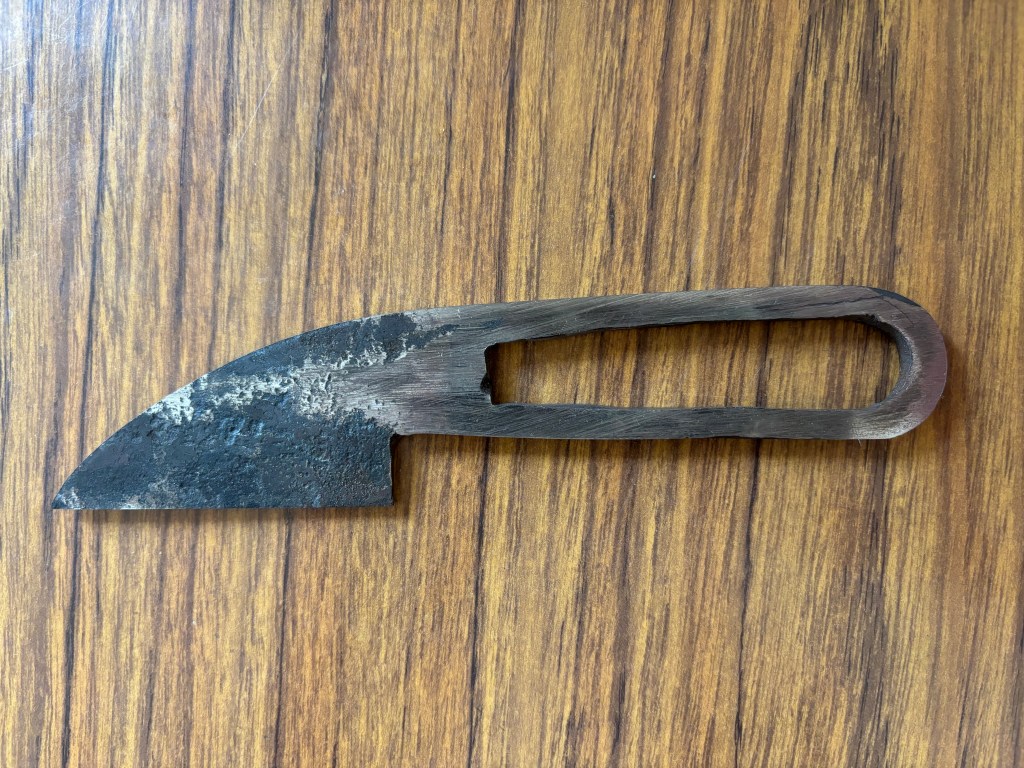
The rough shape, handle is still fresh from the forge but the point and heel of the knife has been refined on a belt grinder.
The hole has been enlarged but is still quite rough from the forge. At this point you can get a good idea of the general proportions, I usually don’t set precise goals for myself when I blacksmith but rather a general span I’d like to end up in. This one turned out just right for me. : )
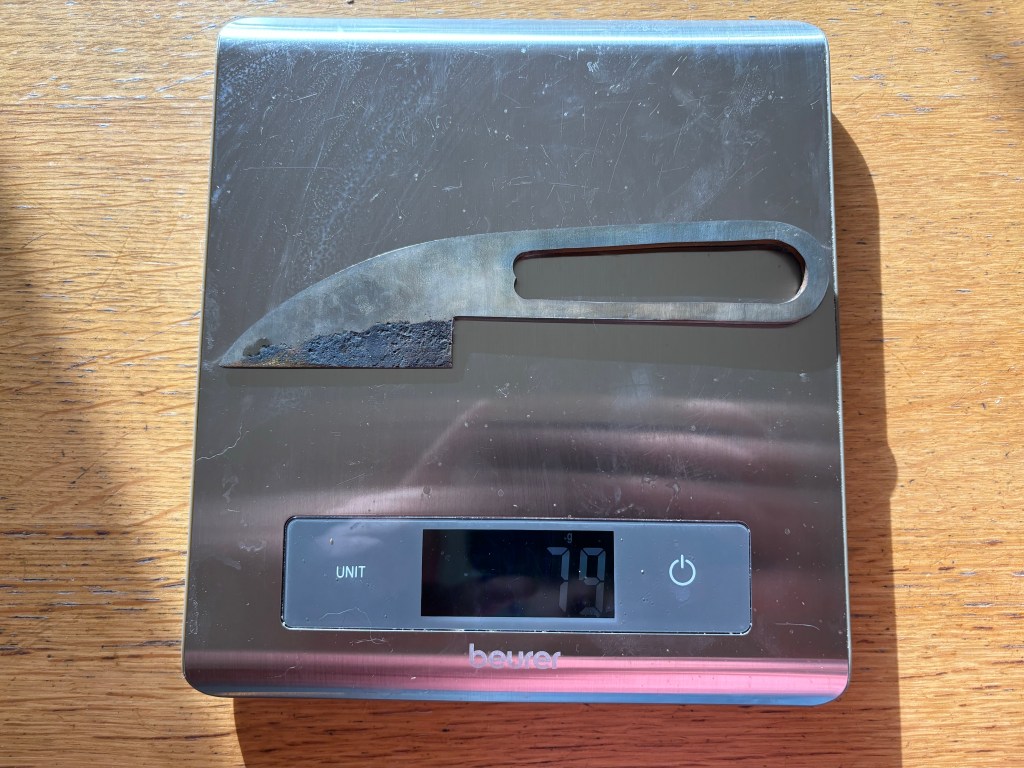
Weigh in pre edge grind.
I got the inside of the handle filed down and did some flattening of the faces on the grinder. The initial weigh in was 79 grams. I don’t usually remember to weigh my knives, but it was fun to see how low I could push that number.
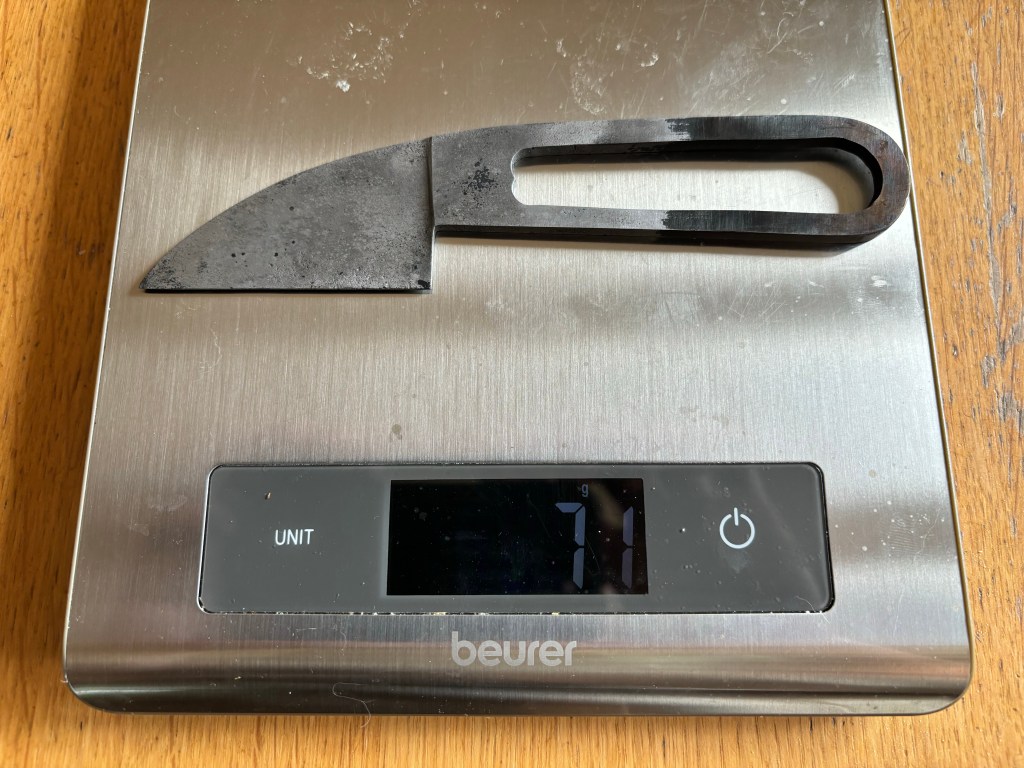
Post edge grind weigh in.
A bit out of order, but here’s the weigh in after I put the full flat grind on. 71 grams. At this point the knife has been hardened, it wasn’t the best quench but I think it worked out well enough.
Quenching in oil.
I don’t have a good setup for quenching. It’s a plastic tube filled with vegetable oil, but it does work for small things like this. This knife skates a file just fine and there was no cracking to be heard during the quench.
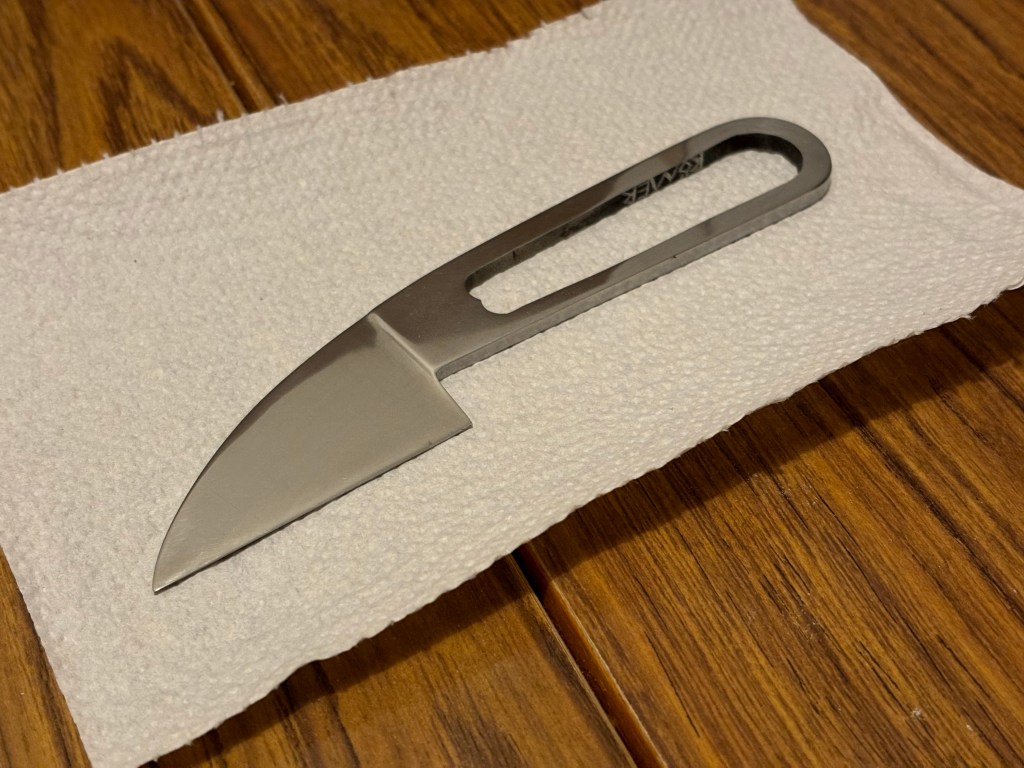
Finished the final sanding pass.
I think I speak for a lot of makers when I say I dislike hand sanding. It takes a long time, it wears out a lot of sandpaper, and your hands get real dirty. That being said, there’s nothing like it when you’re looking for a good result. Sometimes you have to bite the sour apple and get sanding.
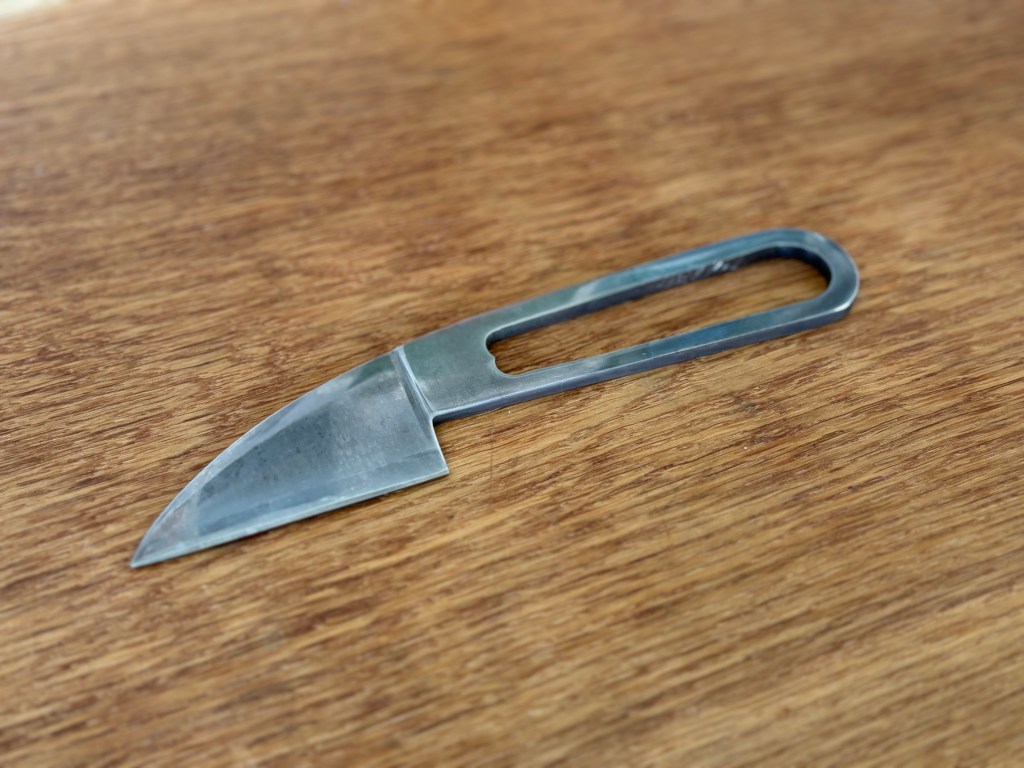
I used slightly diluted apple cider vinegar as an etching solution. It was a new technique for me and I’m really pleased with the result! I especially like how it brings out the quench- lines on the tang.
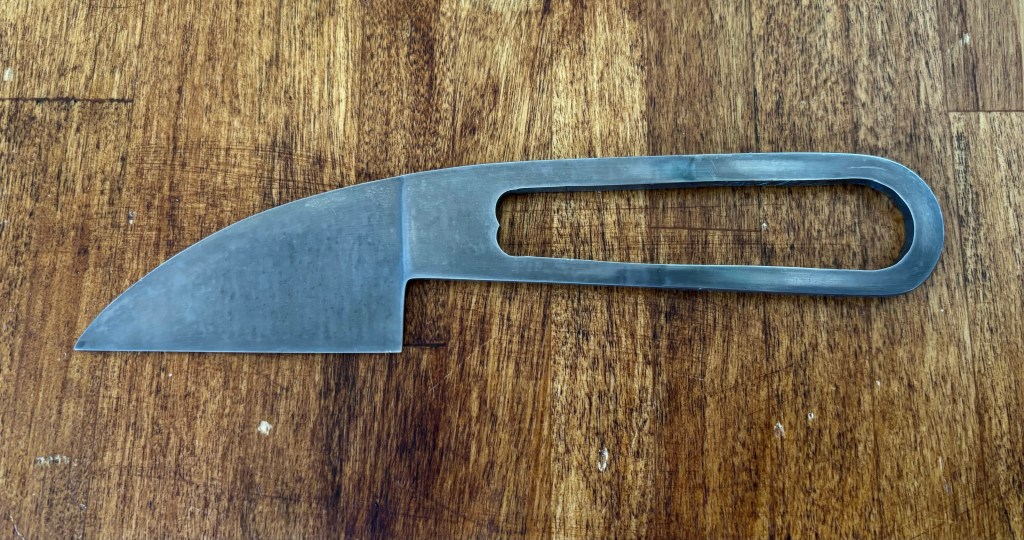
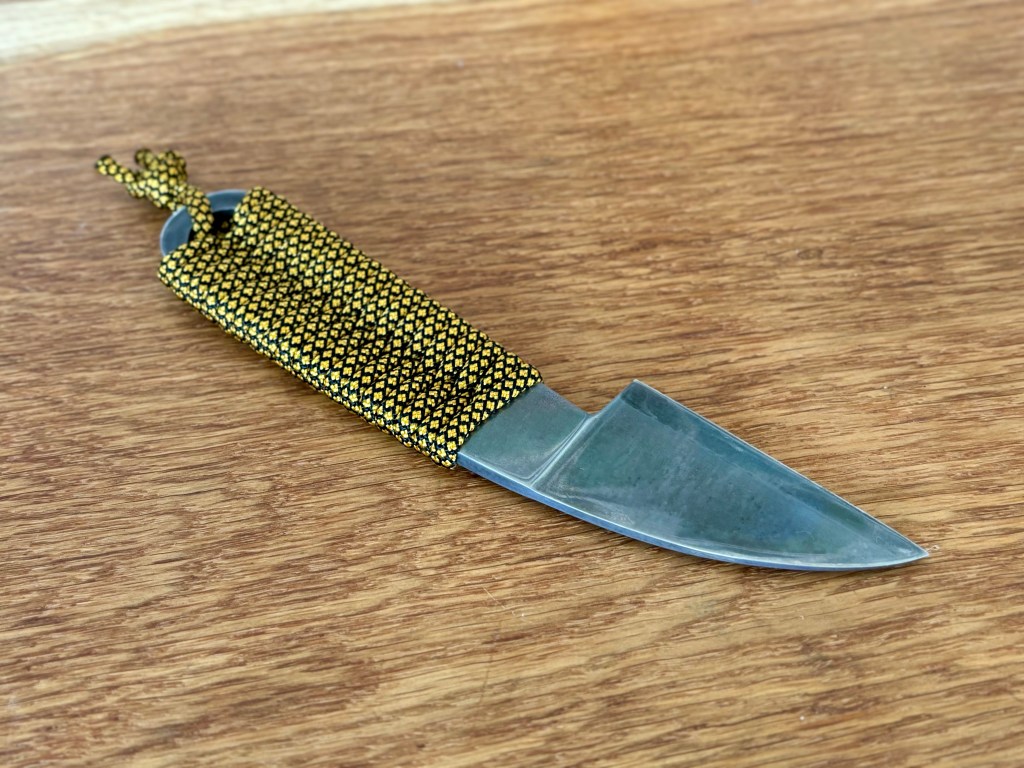
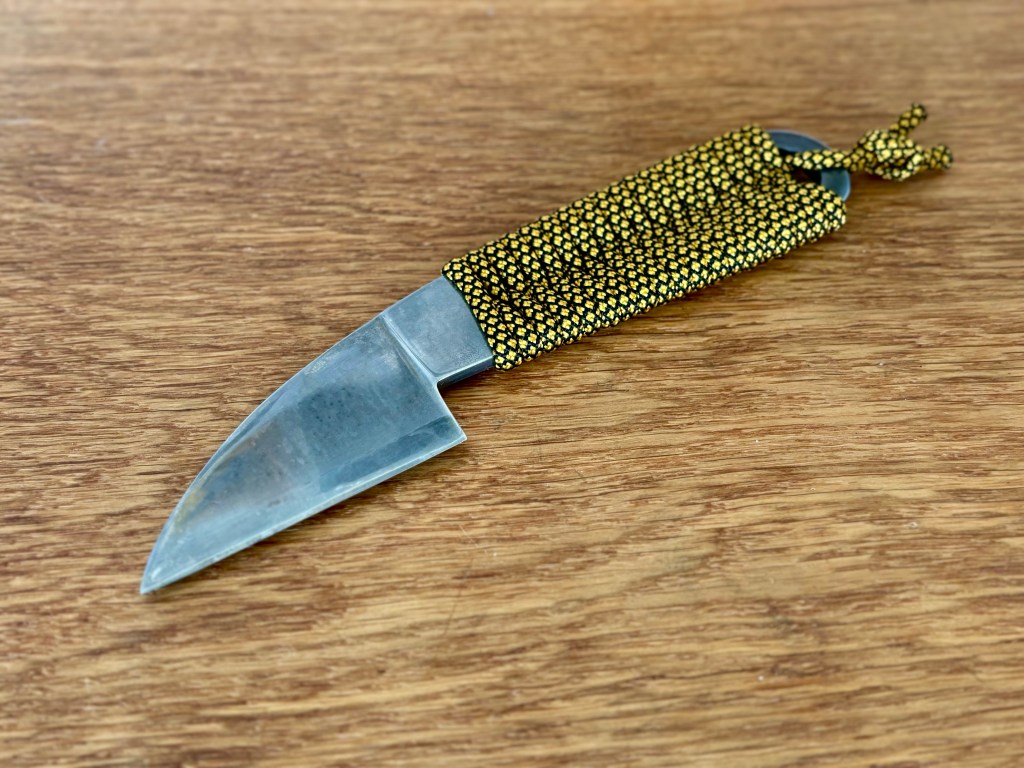
I don’t think I ever measured the paracord, but there’s a decent amount on there and it makes for a decently comfortable handle considering that the tang is essentially skeletonised.
Thank you for reading!
I hope posts like this inspire people to get into blacksmithing, it’s a really rewarding hobby that can help you become a more self sufficient person. It’s also a lot cheaper to get started in than one would expect.
 RömerWorks
Leave a comment